Leak Detection and Locating
Acoustic listening and thermal imaging to pinpoint the break before any digging. This is included in every repair because it is the difference between one small excavation and a trench across the yard.
When a line lets go, Burst Water Line Repair Norristown PA crews respond 24/7 across Montgomery County. We shut off the water, pinpoint the break with acoustic and thermal gear, and repair or replace the line the same day in most cases. Whether it is a frozen pipe in January or a corroded copper service line under your front yard, we handle water line repair Norristown homeowners trust, with upfront pricing before we cut a single fitting.
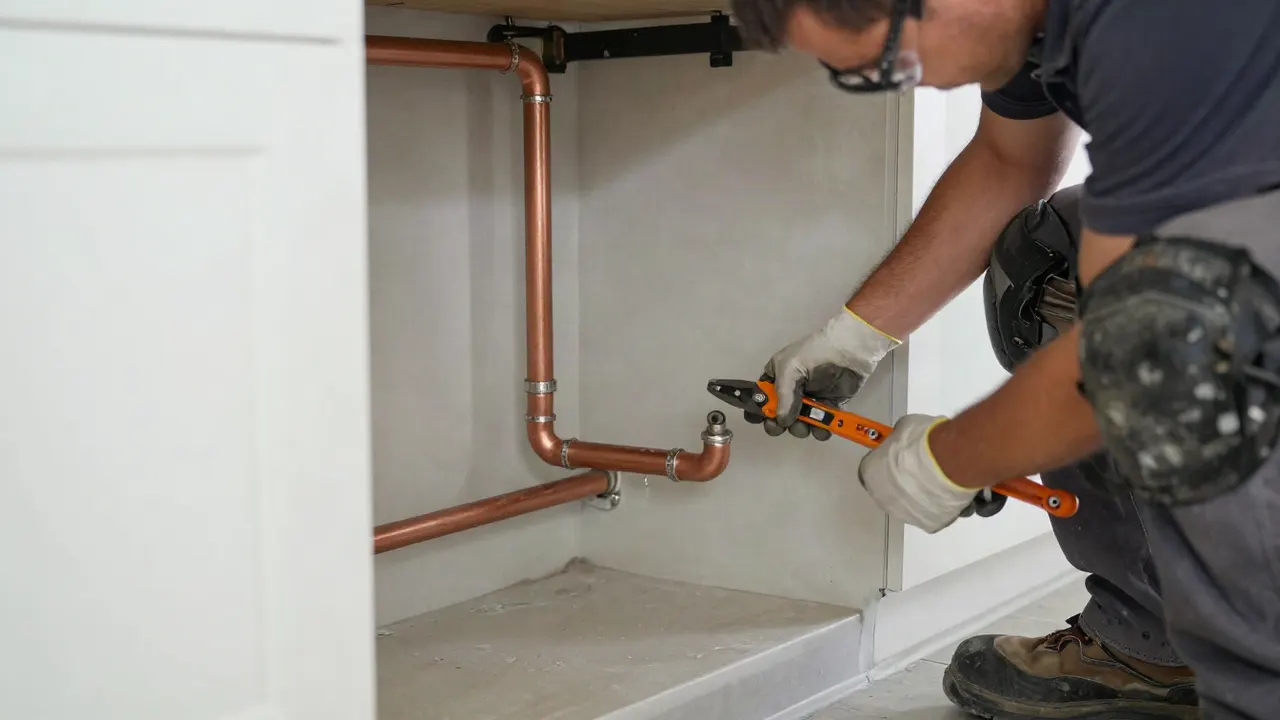
Burst Water Line Repair Norristown PA is the emergency and scheduled repair of the pressurized pipe that carries water from the main or meter into your home, restoring flow without further damage to your foundation, yard, or wallet. A burst line is not just a leak; it is a pressure failure, often at a joint, a corroded section of copper, or a hairline crack that opened when the ground shifted. We isolate the break, cut out the failed section, and rebuild it with copper or PEX tubing sized to match your existing service.
Norristown's older housing stock makes this a weekly call. Many homes off Dekalb Street and around the 19401 ZIP still run original galvanized or thin-wall copper service lines that have been patched more than once. Add a hard freeze, and a frozen pipe splits before you ever see a puddle. If you need emergency water main repair in Norristown Pennsylvania, we answer the phone at 2 a.m. and roll a truck with a pipe cutter, press tool, and soldering torch already on board.
Every burst line job is a little different, but the core scope is consistent: find the break, fix it to code, prove it holds, and put the site back together. Here is what is included in a standard repair, and what we price separately if the job calls for it.
Acoustic listening and thermal imaging to pinpoint the break before any digging. This is included in every repair because it is the difference between one small excavation and a trench across the yard.
Removal of the failed section and installation of new copper or PEX tubing with press or soldered fittings, matched to your existing line size and material. Lead-free solder and code-approved fittings only.
We cap the line and pressurize it to 80 to 100 psi for at least 15 minutes before backfilling. You get the result, not just a promise. A repair that does not hold does not get buried.
We backfill, compact, and restore the surface as close to original as the site allows. Grass seed, topsoil, and concrete patch are part of the job, not an afterthought.
You get a plain-language summary of what failed, what we installed, and the test results, plus our 1-year workmanship warranty on the repair. It is your record if you ever sell the house.
You call, we ask three questions: where the water is showing up, whether the meter is still spinning with everything off, and what kind of pipe you have. That tells us whether to walk you through shutting the curb stop or send the emergency truck immediately. Most calls are triaged in under five minutes.
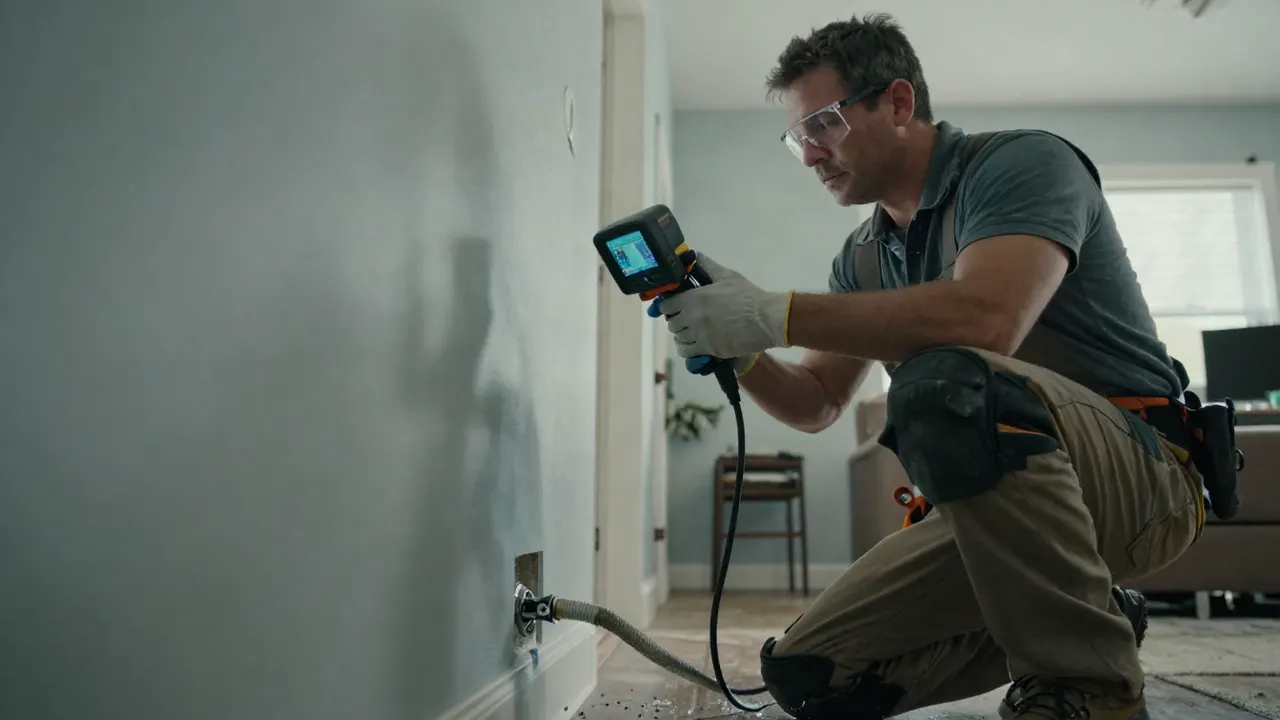
On site, we confirm the shutoff, then use a leak detection microphone to listen for the hiss of escaping water and a thermal imaging camera to spot temperature differences in the slab or yard. Pinpointing the break takes 20 to 45 minutes and saves hours of exploratory digging.
We dig or open the wall only where the break is. The failed section gets cut out cleanly with a pipe cutter, and we inspect the surrounding pipe for corrosion or pipe joint failure that would fail next month. If the rest of the run is thin, we tell you before we proceed.
New copper or PEX goes in with press fittings or soldered joints, matched to the existing line size. We then cap the run and pressurize it with a hydrostatic test pump, holding 80 to 100 psi for at least 15 minutes. If it holds, we backfill; if it drops, we find the weeping joint before it becomes your problem.
We backfill, compact, and restore the surface as close to original as the site allows, then walk you through what failed and why. You get the test results, the materials used, and a plain answer on whether the rest of the line is on borrowed time. Typical total job time is three to six hours.
You call, we ask three questions: where the water is showing up, whether the meter is still spinning with everything off, and what kind of pipe you have. That tells us whether to walk you through shutting the curb stop or send the emergency truck immediately. Most calls are triaged in under five minutes.
Listens for the hiss of escaping water underground or behind a wall, narrowing the break to a small area before any digging starts.
Spots temperature differences from a slab leak or a buried line, which confirms the microphone reading and keeps the excavation small.
Pressurizes the repaired line to 80 to 100 psi and holds it for at least 15 minutes, proving the joint holds before we backfill.
Makes code-correct joints on copper and PEX. Press fittings speed up the repair; soldered joints are used where the existing line calls for them.
Cuts the failed section cleanly and disassembles threaded fittings without damaging the surrounding pipe, which matters on older galvanized lines.
Clears debris that can enter a line during a repair or a shutoff, so the water flows clean when we turn it back on.
A homeowner in East Norristown heard a bang during a January cold snap and found water pouring through the crawlspace. The split was in a thin copper line that had frozen and let go as it thawed.
After: We shut the curb stop, cut out the split section, and replaced it with PEX rated for freeze stress. The line held 90 psi for 20 minutes on the hydrostatic test, and the crawlspace was dry by the end of the visit.
Book this service →A Downtown Norristown home had a soggy patch in the yard and a water bill that doubled. The service line was original galvanized, corroded at a joint about four feet from the foundation.
After: We located the break with acoustic listening, excavated a small area, and replaced the failed section with copper. The pressure test held at 85 psi, and the water bill returned to normal the next cycle.
Book this service →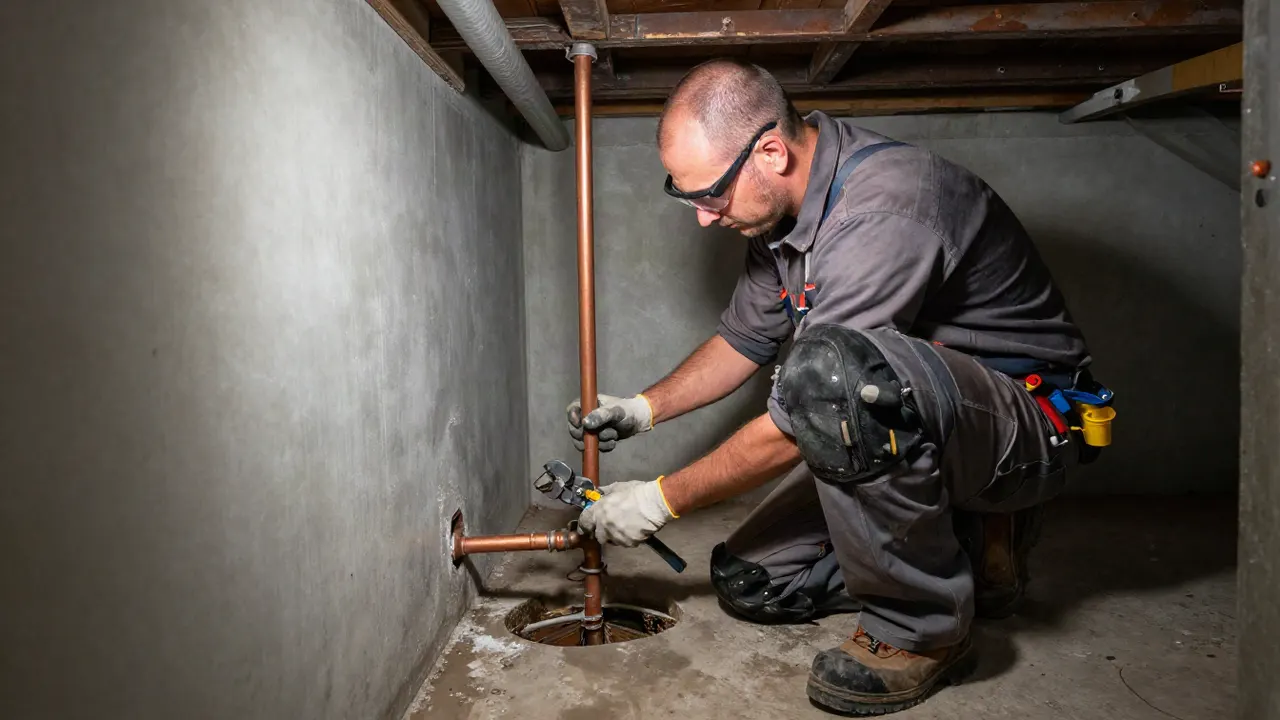
A homeowner near the 19401 ZIP noticed warm spots on the basement floor and a meter that kept spinning. The break was a joint failure under the slab, wasting water and threatening the floor.
After: Thermal imaging found the hot spot, and we opened only that area. The joint was rebuilt and pressure-tested at 100 psi for 15 minutes before the concrete patch went back. The meter stopped spinning.
Book this service →Most burst lines announce themselves with a wet floor, a spinning meter, or a sudden drop in pressure. The trick is acting before the water travels. These are the calls we run most often.
Ask a pro →We shut the line down, cut out the split section, and replace it with PEX that flexes under freeze stress. We pressure-test before backfill and walk you through insulating or heat-tracing the run so it does not happen again next winter.
We inspect the surrounding pipe when we open the break. If the run is thin, we quote a partial or full replacement with copper or PEX so you are not paying twice in the same season.
We locate the intrusion, cut out the damaged section, and repair with new pipe and fittings. Where roots are aggressive, we discuss trenchless replacement to reduce future digging.
We use thermal imaging to find the hot spot, confirm with acoustic listening, then open only the area needed. The joint is rebuilt and pressure-tested before the patch goes back.
Typical 2026 pricing runs $450 to $1,800 for a residential burst line repair, with most jobs landing near $850. The range depends on depth, pipe material, whether the break is under a slab or in the yard, and how much restoration is needed. A simple exposed basement repair sits at the low end; a deep main under a driveway pushes toward the top.
The homeowner is responsible for the service line from the curb stop or meter pit to the house, which is where most bursts happen. The borough handles the main in the street and the curb stop itself. If the break is on your side of the curb stop, the repair is yours, and that is the line we fix.
Sometimes, yes. If the line is a continuous material like PEX or copper with a single clean break, we can often pull a new line through the old one or use a trenchless pull that needs only two small access pits instead of a full trench. We confirm feasibility with a camera and locate first, then tell you honestly which method fits.
Yes, we run a 24/7 emergency line and aim to have a truck at your door within 60 to 90 minutes for a burst line inside Norristown. We will walk you through shutting the curb stop or main valve while we are en route so the damage stops before we arrive.
Shut the water off at the curb stop if you can, then call us. We answer 24/7, give you a straight price before we dig, and stand behind the repair with a 1-year workmanship warranty. One call gets a licensed crew headed your way.
Call for Service 144298564 →Call us any hour, any day. A live dispatcher answers, gives you a real arrival window, and walks you through shutting off the main so the flooding stops before we arrive. Most Norristown calls get a crew on-site within the hour.